
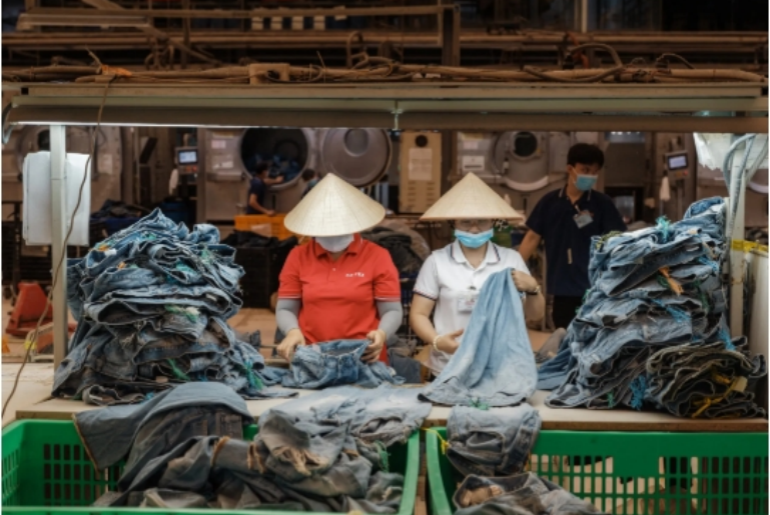
Vietnam’s economy grew faster than expected in the fourth quarter of 2025, as manufacturing, investment, and trade gained momentum despite President Donald Trump’s tariffs.
Gross domestic product expanded 8.46% in the October-December period in 2025, according to data from the National Statistics Office in Hanoi. That beat all estimates in a Bloomberg survey, with a median of 7.7%.
That was the fastest pace for the fourth quarter since 2011, the statistics office said in a statement. Growth for the full year came in at 8.02%, missing the government’s 8.3% to 8.5% goal for 2025.
“Despite falling short of the government’s target, 2025 GDP growth was still very encouraging and exceeded all forecasts, supported by resilient exports and increased public investment,” said Pham Vu Thang Long, chief economist at Ho Chi Minh City Securities.
Vietnam maintained its status as one of the world’s fastest-growing economies as aggressive lending, supportive state policies and a weaker dong — along with surging tourism — helped it navigate the imposition of a 20% US tariff.
The Southeast Asian nation, which ships everything from footwear to furniture to America, posted a record $133.9 billion trade surplus with the US in 2025, a 28% jump from the year before, according to the statistics agency. Vietnam already had the third-largest US trade gap, behind only China and Mexico, underscoring the scale of supply chain shifts away from its northern neighbor.
Vietnam has emerged across both Trump terms as an export powerhouse and as a target of his accusations of trade partners ripping off the US. Its manufacturing and shipments to the US surged after Trump started targeting Chinese suppliers with trade restrictions and firms moved to Vietnam to avoid tariffs. After months of tariff deal talks, negotiators from both sides continue to hammer out the terms of a detailed agreement.
Exports in December 2025 jumped nearly 24% from a year earlier. Manufacturing, which expanded by more than 10% in the fourth quarter, was the main driver of economic growth, according to the statistics office.
Vietnam’s push for faster growth carries risks, however.
Banks have been facing liquidity pressures after lending rose 17.9% in 2025, outpacing deposit growth of 14%, the central bank said last week. The regulator has taken steps to boost cash availability for lenders, including through dollar-swap transactions.
In November 2025, Fitch Ratings warned that the rapid pace of lending by Vietnamese banks was heightening risks, noting that loan growth has for years exceeded economic growth.
“Inflation management poses risks in 2026 as fluctuations in the prices of energy and goods in the global market are still hard to predict,” said Nguyen Thu Oanh, head of the price department at the statistics office at a briefing Monday. “Logistics fees may continue rising and conflicts in the global context may create disruptions in supply,” she added.